When couples face difficulty conceiving naturally, assisted reproductive technologies (ART) offer hope and solutions. Among the most widely used options are ICSI vs IVF, both effective methods for helping couples achieve parenthood. However, choosing the right fertility treatment depends on several factors such as the underlying cause of infertility, medical history, and personal preferences. In this blog, we will explore the differences, advantages, and situations where each treatment is recommended.
For expert consultation and personalized fertility care, visit Meerut IVF Centre.
Understanding IVF (In Vitro Fertilization)
IVF, or In Vitro Fertilization, is one of the most common fertility treatments worldwide. In this process, mature eggs are retrieved from the ovaries and fertilized with sperm in a laboratory dish. Once embryos are formed, they are carefully selected and transferred into the woman’s uterus.
Steps Involved in IVF:
- Ovarian Stimulation – Hormone injections stimulate the ovaries to produce multiple eggs.
- Egg Retrieval – Mature eggs are collected through a minor procedure.
- Fertilization – Eggs and sperm are combined in a lab dish to allow natural fertilization.
- Embryo Culture – Fertilized eggs develop into embryos over 3–5 days.
- Embryo Transfer – The best-quality embryo is placed in the uterus.
IVF is commonly recommended for women with blocked fallopian tubes, ovulation disorders, unexplained infertility, or mild male infertility issues.
Understanding ICSI (Intracytoplasmic Sperm Injection)
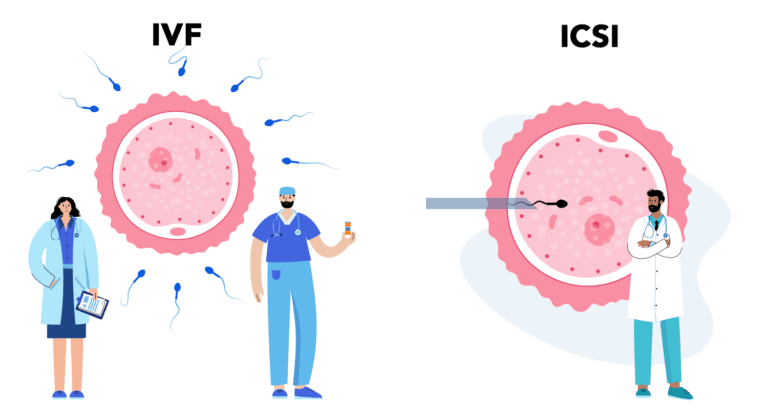
ICSI, or Intracytoplasmic Sperm Injection, is a specialized form of IVF designed to address severe male infertility. Instead of allowing sperm to fertilize an egg naturally in a dish, a single healthy sperm is directly injected into an egg using advanced micromanipulation techniques.
Steps Involved in ICSI:
- Ovarian Stimulation & Egg Retrieval – Same as IVF.
- Sperm Selection – A single, healthy sperm is carefully chosen.
- Direct Injection – The selected sperm is injected into the egg using a fine needle.
- Embryo Development & Transfer – The fertilized egg grows into an embryo and is transferred to the uterus.
ICSI is highly effective for men with very low sperm count, poor sperm motility, abnormal sperm shape, or in cases where previous IVF attempts failed due to fertilization issues.
ICSI vs IVF: Key Differences
While both methods fall under assisted reproductive technologies, they differ mainly in how fertilization occurs.
- Fertilization Method:
- IVF: Egg and sperm are combined naturally in the lab.
- ICSI: A single sperm is directly injected into the egg.
- Best For:
- IVF: Women with female infertility factors or unexplained infertility.
- ICSI: Couples with male infertility issues or failed IVF cycles.
- Success Rate:
- Both procedures have high success rates, but ICSI may slightly increase the chances in cases of severe male infertility.
Choosing the Right Fertility Treatment
The choice between ICSI vs IVF depends on the root cause of infertility:
- If the issue lies with the woman’s reproductive system (blocked tubes, ovulation problems), IVF is usually the first choice.
- If the issue lies with the man’s sperm quality or quantity, ICSI is often more suitable.
- Sometimes, doctors recommend starting with IVF and switching to ICSI if fertilization problems occur.
It is always best to consult with fertility specialists who can assess your individual case, run necessary tests, and recommend the most suitable fertility treatment for your situation.
Final Thoughts
Both ICSI vs IVF are groundbreaking technologies that have given countless couples the joy of parenthood. The decision is not about which treatment is “better,” but which one is best suited for your medical condition and reproductive goals.
If you are struggling with infertility, seeking guidance from an experienced fertility expert is the first step toward success. The team at Meerut IVF Centre provides world-class treatments, advanced technology, and compassionate care tailored to each couple’s unique journey.
FAQs:
ICSI has higher fertilization rates in cases of male infertility, but overall pregnancy success depends on the woman’s age, egg quality, and other health factors.
Primarily yes, but ICSI can also be used when previous IVF cycles have failed or when eggs are limited in number.
Your doctor will conduct fertility tests on both partners and recommend the most suitable option based on medical history and test results.